Why a Child With ADHD May Need More Support Than You Think
One of the things I think is often misunderstood about ADHD is how much support a child may actually need.
We sometimes expect a child with ADHD to function independently in exactly the same way as every other child of the same age. But if a child struggles with executive functioning, they may need considerably more external support to do things that other children can manage relatively independently.
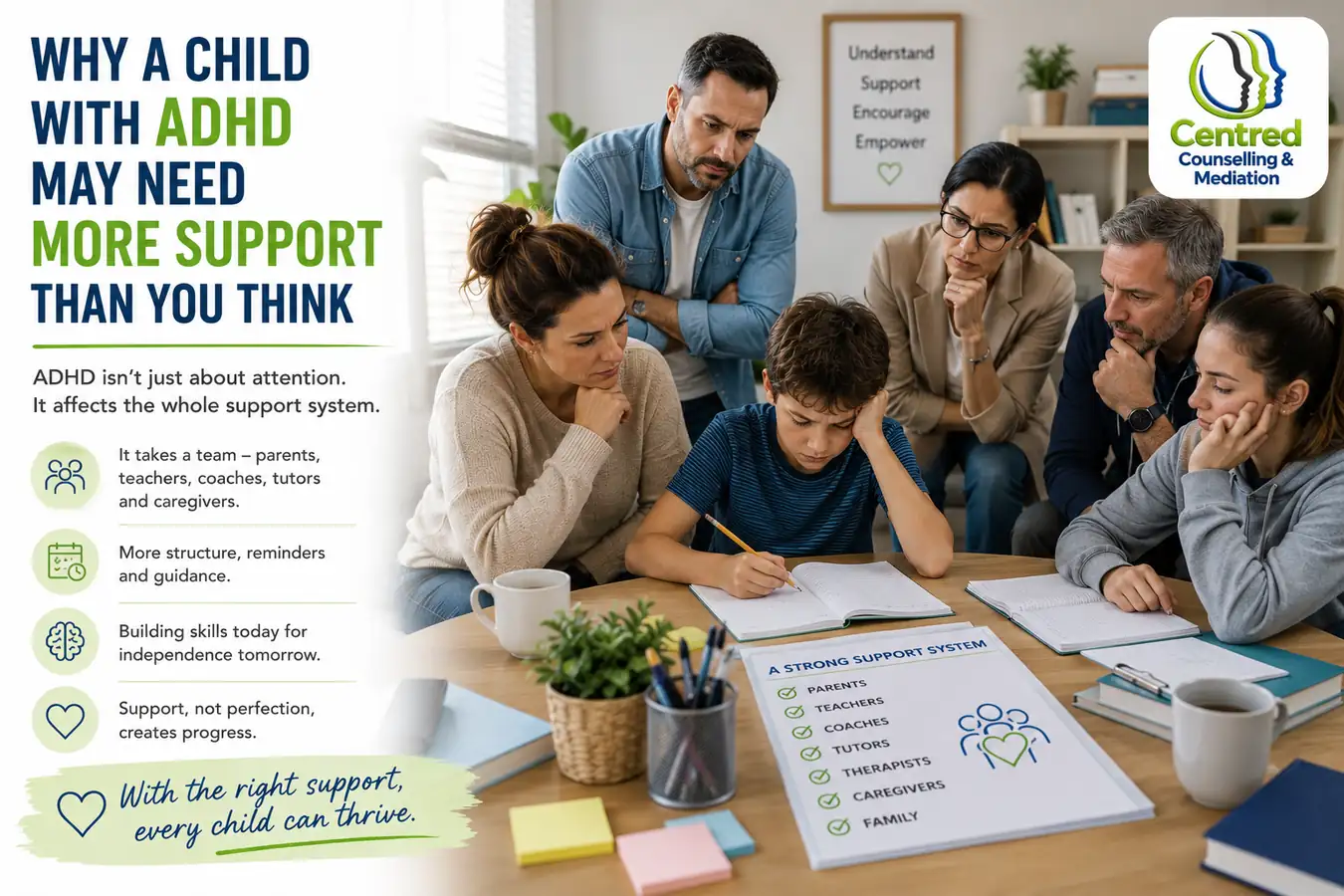
And that support doesn't just come from parents. It can come from:
- Teachers
- Coaches
- Grandparents
- Tutors
- Therapists
- School staff and other caregivers
And when you add all of that together, you start to understand why ADHD can be so exhausting for families.
Think About How Many People Are Involved
A child with ADHD might need a parent to help them organise their morning.
A teacher may need to give them additional reminders or break instructions into smaller steps.
A coach may need to redirect their attention during training.
A tutor may need to help them stay focused on a task.
A parent may then have to follow up with homework, school communication, medication and routines at home.
None of these things, individually, sounds particularly overwhelming. But put them all together. That's a lot of attention. And that's one of the reasons ADHD can become a family issue rather than simply an individual issue.
It's Not Necessarily That the Child Needs More Attention
This is an important distinction.
A child with ADHD doesn't necessarily need someone standing over them every second. What they often need is more external structure and more frequent feedback.
For example, instead of:
“Go upstairs, get dressed, brush your teeth, pack your bag and come downstairs.”
A child with ADHD may respond better to:
“Go and get dressed first. I'll check back with you in five minutes.”
Then:
“Okay, now let's get your school bag ready.”
The goal isn't to do everything for the child. The goal is to provide enough external structure while they are still developing the ability to provide that structure for themselves.
And This Can Become Exhausting
Imagine having to provide this level of support every morning. Then again with homework. Then again with sport. Then again at bedtime. And then doing it again tomorrow. And the day after that.
This is where parental stress can start to build:
“I'm constantly managing something.”
And eventually, that can turn into frustration:
“Why do I have to remind you about everything?”
But from the child's perspective, they may genuinely be struggling with the very skills that the parent is expecting them to use.
That's the difficult part. The parent wants independence. The child may not yet have the executive-function capacity to consistently produce that independence.
School Becomes Part of the Support System
This is why ADHD shouldn't be treated as something that only happens at home.
For school-aged children, educational interventions and individualised school supports can form an important part of ADHD management. These can include behavioural classroom interventions, organisational support and adjustments to the learning environment.
So when a child has ADHD, there may be an entire network of adults helping them function:
Parent → Teacher → Coach → Healthcare professional → Tutor → Family → Child
And the more significant the child's difficulties, the more support that network may need to provide.
What Happens in Sport?
This is an area that can easily be overlooked.
A child with ADHD may be highly talented and enthusiastic about sport but still struggle with things that happen around the sport:
- Remembering equipment.
- Arriving on time.
- Listening to instructions.
- Waiting their turn.
- Remembering what the coach explained.
- Staying focused during repetitive drills.
- Managing frustration after making a mistake.
A coach who understands ADHD may interpret these behaviours very differently from a coach who doesn't.
Instead of:
“This child isn't listening.”
The coach might recognise:
“This child needs the instruction broken down and repeated.”
That small change can make a big difference.
Everyone Can Get Tired
This is the part that I think families sometimes struggle to talk about.
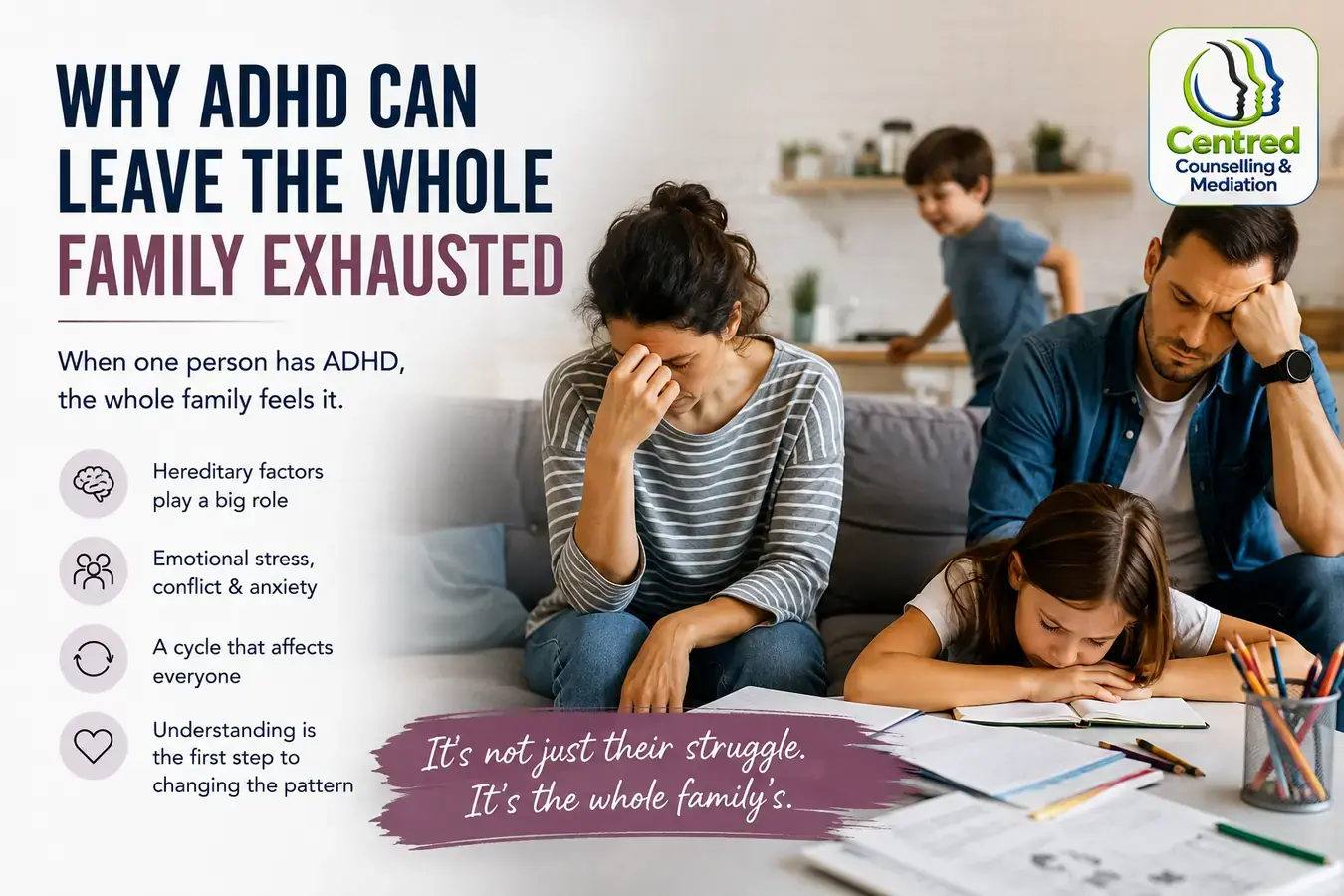
Parents can become exhausted. Teachers can become frustrated. Coaches can become impatient. The child can become embarrassed or feel like they're constantly being corrected. And everyone can start feeling like they're trying to manage the same problem.
- The child hears: “Pay attention.”
- The teacher says: “You weren't listening.”
- The coach says: “You need to focus.”
- The parent says: “How many times do I have to tell you?”
Eventually, the child can start hearing the same message from almost every adult around them:
“You're not doing enough.”
And that's where we need to be careful. Because the purpose of support isn't to constantly remind a child of everything they are doing wrong. It is to help them develop the skills they currently struggle with.
Support Doesn't Mean Doing Everything for Them
This is probably the most important distinction.
Support should be scaffolding, not dependence.
A parent might initially have to remind a child to pack their school bag. Eventually, perhaps the child uses a checklist. Later, they might set their own reminder on their phone. Eventually, the external support can become an internal system.
That's what we're trying to build.
The same principle applies at school and in sport. We don't want a child to become dependent on someone constantly standing over them. We want to gradually transfer responsibility from the adult to the child as their skills develop.
Independence May Take Longer
This is where expectations become important.
A child with ADHD may eventually become completely independent. But their path to getting there may look different:
- One child may learn to organise their school bag after a few reminders.
- Another may need a visual checklist.
- Another may need an alarm.
- Another may need a parent checking the system for much longer.
That doesn't necessarily mean that the child is incapable. It means we need to recognise where their skills currently are rather than constantly comparing them with where we think they should be.
The goal is progression. Not perfection.
Sometimes the Whole Family Needs Support
This is why I don't think ADHD treatment should always be focused exclusively on the person with the diagnosis.
The parent may need support. The teacher may need strategies. The coach may need to understand the child's behaviour differently. The child needs to learn how their own brain works. And the family may need to learn how to communicate without every conversation turning into another reminder or argument.
Because ultimately, the environment around the child can either make ADHD much harder or make it much easier to manage.
If You're Constantly Managing ADHD, You're Not Failing
If you are a parent who feels like you are constantly reminding, organising, checking, correcting and helping your child, it doesn't necessarily mean that you're doing something wrong.
It may simply mean that your child currently requires more external support than you expected.
The important question is whether that support is helping them develop independence — or whether everyone has become trapped in a cycle of constant reminders and frustration.
Counselling can help parents understand ADHD, develop practical strategies, improve communication and find healthier ways of supporting a child without taking over everything for them.
If ADHD is creating stress in your home, school or family relationships, get in touch with Centred Counselling & Mediation to discuss how counselling and practical support could help.
The Bottom Line
A child with ADHD may need more support than other children of the same age.
That doesn't mean they are lazy. It doesn't mean they are incapable. And it certainly doesn't mean they will always need someone helping them.
It means that while their executive-function skills are developing, they may need scaffolding from the adults around them.
The goal is not to remove responsibility. The goal is to build the skills that eventually make independence possible.
Let's get you back on track!
Centred Counselling
Counselling & Family Mediation Services
- 📞 +27 84 485 3541
- 🌐 https://www.centredcounselling.co.za/
- ✉️ info@centredcounselling.co.za
Follow us:
- TikTok: www.tiktok.com/@centred.counselli
- YouTube: https://www.youtube.com/@CentredCounselling
- Instagram: https://www.instagram.com/centred_counselling
- Facebook: https://www.facebook.com/share/1AtmNzrAEo/?mibextid=wwXIfr
- Pinterest: https://pin.it/i0CksW39W
- Threads: https://www.threads.com/@centred_counselling