
Relationships and Family Pressure email moved to Checked off.
Next: LGBTQ+ Mental Health — 9 October 2026
Page title: LGBTQ+ Mental Health: Anxiety, Depression and Support | Centred Counselling
Meta description: Explore how stigma, rejection and pressure to fit in can affect LGBTQ+ mental health, and learn practical ways to support wellbeing and find affirming counselling.
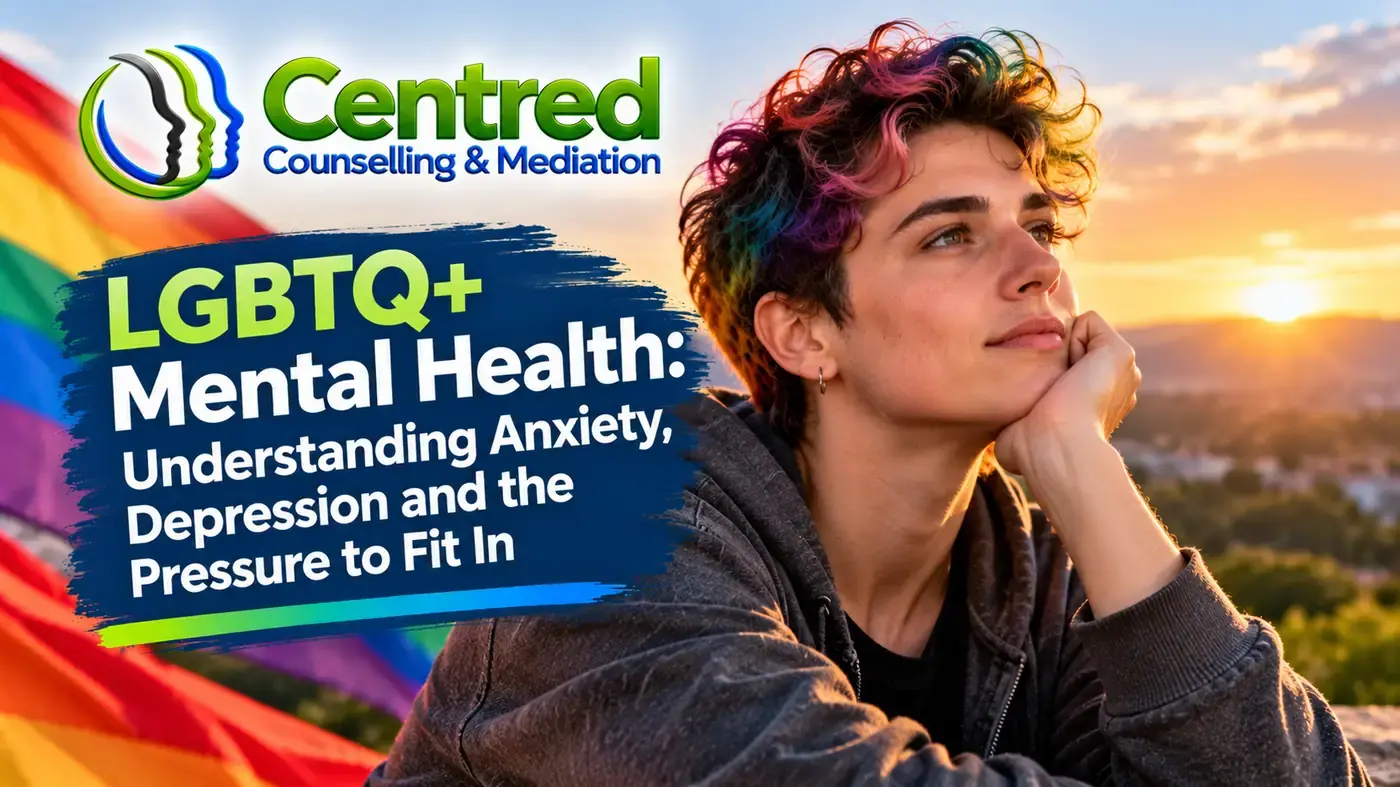
[Download the supplied image](C:/Users/cash/OneDrive/Desktop/webtemlates/centeredcounseling/blogs/LGBTQ_Mental_Health_Blog_Image_Under_100KB.webp)
From the Counsellor’s Chair
LGBTQ+ Mental Health: Understanding Anxiety, Depression and the Pressure to Fit In
LGBTQ+ people experience the same range of emotions and mental-health challenges as anyone else. However, stigma, discrimination, rejection or pressure to hide parts of themselves can add stress that affects emotional wellbeing. Some people may feel they need to monitor what they say, anticipate negative reactions or constantly decide whether it is safe to be open about their identity.
These experiences can contribute to anxiety, low mood, loneliness or exhaustion. They do not mean that being LGBTQ+ is a mental-health problem. The distress often relates to how a person is treated, the support available to them and the demands of navigating environments that may not feel accepting.
What Is Minority Stress?
Minority stress describes the additional strain that can arise when people from stigmatised or marginalised groups face prejudice, exclusion, discrimination or the expectation that they might. For LGBTQ+ people, this may include direct insults or harassment, but it can also involve more subtle experiences such as repeated assumptions, dismissive comments, pressure to keep a relationship secret or uncertainty about whether a setting is safe.
The stress can be external, such as bullying or discrimination, or internal, such as anticipating rejection or absorbing negative messages about oneself. Not every LGBTQ+ person experiences these pressures in the same way, and supportive families, communities and workplaces can make a meaningful difference.
How Pressure to Fit In Can Affect Daily Life
Trying to meet other people’s expectations can take considerable emotional energy. Someone may avoid mentioning a partner, change how they speak or dress in certain settings, laugh along with hurtful jokes to avoid conflict, or constantly assess whether disclosure is safe. Some people feel they must explain or defend their identity, while others try to make themselves less noticeable.
These strategies may feel protective in the short term, particularly where a person faces real risks. However, having to stay alert or conceal important information repeatedly can become tiring. It is important not to blame people for adapting to their circumstances: decisions about privacy and disclosure can be practical ways to protect safety, employment, housing or relationships.
Anxiety: Always Anticipating the Next Reaction
Anxiety can involve persistent worry, tension, difficulty relaxing, irritability, disrupted sleep or repeatedly replaying conversations. A person may worry about being judged, rejected by family, treated differently at work or outed without permission. In some situations, being alert to risk is understandable; the challenge is when worry becomes constant or begins to restrict everyday life.
It may help to identify which concerns reflect a realistic risk that needs practical planning and which worries continue even in relatively safe situations. Both deserve compassion. Practical steps might include identifying trusted people, planning how to respond to intrusive questions, setting online privacy boundaries and choosing when to leave an uncomfortable interaction.
Low Mood, Depression and Isolation
Repeated rejection or the feeling of not belonging can affect mood and self-esteem. Someone may withdraw from friends, lose interest in activities, feel hopeless or struggle with energy and concentration. Depression is more than an occasional bad day; if low mood or loss of interest persists and interferes with daily life, professional assessment may be helpful.
Isolation can develop when a person avoids social situations to reduce the risk of criticism or feels that no one will understand. While taking space can sometimes be protective, prolonged isolation may leave someone with fewer opportunities for connection and support. Small, manageable steps toward safe relationships or meaningful activities can help rebuild a sense of connection.
Internalised Stigma and Self-Doubt
When negative messages are repeated by family, peers, media or institutions, some people may begin to question their own worth or believe that they should be different to deserve acceptance. This is sometimes described as internalised stigma. It can appear as shame, self-criticism, fear of being seen, or pressure to meet expectations that conflict with one’s own experience.
These beliefs can be explored without blaming the person who has absorbed them. Consider whose standards you are trying to meet, where those messages came from, and whether they align with the kind of life and relationships you want. You do not have to settle every question about identity, culture or faith at once.
Practical Ways to Support Your Mental Wellbeing
- Identify safe connections. Spend time with people who respect your privacy and treat you with care. Support may come from one trusted friend rather than everyone in your life.
- Set boundaries around disrespect. Where it is safe, say when comments are hurtful, ask for respectful communication or leave an interaction that becomes abusive.
- Make disclosure decisions at your own pace. You do not owe everyone personal information. Consider your safety, housing, finances, work and emotional readiness before sharing.
- Reduce exposure to repeated online hostility. Use mute, block, privacy and reporting tools when helpful, and avoid feeling obliged to respond to every hostile comment.
- Maintain everyday routines. Sleep, regular meals, movement, meaningful activities and time away from stressful environments can support general wellbeing.
- Notice what helps you recover. After a difficult interaction, give yourself time to settle, connect with a supportive person or do something grounding.
- Seek help when distress persists. If anxiety, low mood, sleep problems or isolation are affecting daily life, consider speaking with a qualified mental-health professional.
You Do Not Have to Educate Everyone
It can be exhausting to repeatedly explain your identity or respond to inaccurate assumptions. You may choose to have a conversation with someone who appears open to learning, but you are not responsible for correcting every person or changing every opinion. Choosing not to engage can be a healthy boundary, especially when the other person is hostile or the interaction feels unsafe.
If you do choose to respond, you might say: “I’m happy to talk if we can be respectful,” or “That is personal information, and I’m not discussing it right now.” You can also leave the conversation. The right response depends on your circumstances, and safety matters more than delivering the perfect explanation.
Building Self-Acceptance Without Pressure
Self-acceptance is not always a sudden feeling of confidence. It may develop gradually as you understand yourself, build supportive relationships and decide which beliefs you want to carry forward. You can have questions, mixed feelings or changing language for your experience and still deserve respect.
Affirming support should not require you to adopt a particular label, disclose your identity or make a specific relationship decision. It should provide room to explore your own experience while recognising the real impact that stigma and discrimination can have.
When Should You Consider Professional Support?
Consider seeking support if anxiety or low mood persists, you feel increasingly isolated, you struggle to sleep or concentrate, relationships are being affected, or you find it difficult to cope after discrimination or rejection. You do not need to wait until things become overwhelming to talk to someone.
If you feel at immediate risk of harming yourself or cannot keep yourself safe, seek urgent help from local emergency or crisis services and reach out to a trusted person who can stay with you. Do not rely on a blog article or routine counselling appointment for an immediate crisis.
How LGBTQ+-Affirming Counselling Can Help
LGBTQ+-affirming counselling can offer a space to discuss anxiety, low mood, rejection, family conflict, self-esteem and decisions about disclosure without treating sexual orientation or gender identity as something to be fixed. Counselling may help you recognise stress patterns, strengthen coping strategies, practise boundaries and identify sources of support.
The aim is not to suggest that distress is all in your mind or that you alone must adapt to discrimination. It is to support your wellbeing and choices while taking your circumstances seriously. If privacy is a concern, ask about confidentiality and its limits before sharing sensitive information.
You Deserve Support and Respect
Being LGBTQ+ does not make someone inherently more likely to need counselling, and not everyone experiences stigma or mental-health difficulties. But if pressure to fit in, rejection or discrimination is affecting your wellbeing, you do not have to work through it alone. Support can help you protect your energy, strengthen relationships and make decisions that fit your circumstances.
Centred Counselling & Mediation offers counselling in Sunninghill, Sandton, and online. If you would like support with anxiety, low mood, self-confidence, family pressure or identity-related concerns, contact the practice to discuss whether counselling may be appropriate for your circumstances.
Frequently Asked Questions
Does being LGBTQ+ cause anxiety or depression?
Being LGBTQ+ is not itself a mental-health problem. Some people experience added stress because of stigma, discrimination, rejection or pressure to hide parts of themselves. Experiences vary, and supportive environments can help.
What is minority stress?
Minority stress is additional strain linked to prejudice, exclusion, discrimination or anticipating negative treatment because someone belongs to a marginalised group.
How can I protect my mental health if my family is not accepting?
Seek support from safe people, set boundaries where possible and consider practical safety before disclosure or confrontation. You can care about family members while limiting harmful interactions.
Do I have to come out to feel better about myself?
No. Disclosure is a personal decision. Your privacy and safety matter, and counselling should not pressure you to come out or remain private.
Can LGBTQ+-affirming counselling help with anxiety and low mood?
It may help you explore stressors, develop coping strategies, strengthen boundaries and identify support without treating your identity as a problem.
When should I seek professional help?
Consider support when distress persists, affects sleep or daily functioning, leads to isolation, or makes relationships difficult. Seek urgent local help if you cannot keep yourself safe.