You're Not Thinking About Cheating. You're Thinking About Connection.
“Affairs rarely begin in the bedroom. They usually begin in the silence between two people.”
One of the biggest misconceptions about infidelity is that people cheat simply because they stop loving their partner.
In reality, many people who contemplate cheating still deeply love the person they are with. What they miss is not always another person—what they miss is feeling connected.
As a counsellor, I've worked with many individuals and couples who arrive convinced that the affair—or the temptation to have one—is the problem. But when we begin unpacking their relationship, it often becomes clear that the affair is only the symptom. The real problem started years earlier.
The Moment That Makes You Question Everything
Imagine you've been with your partner for five, ten, fifteen, or even twenty years. One day at work, a colleague tells you they have feelings for you. A week ago, this person wasn't even on your radar. Now they're constantly on your mind.
Why?
More often than not, they simply made you feel something you haven't felt in a very long time: seen, heard, wanted, and valued.
The Slow Breakdown That Most Couples Never Notice
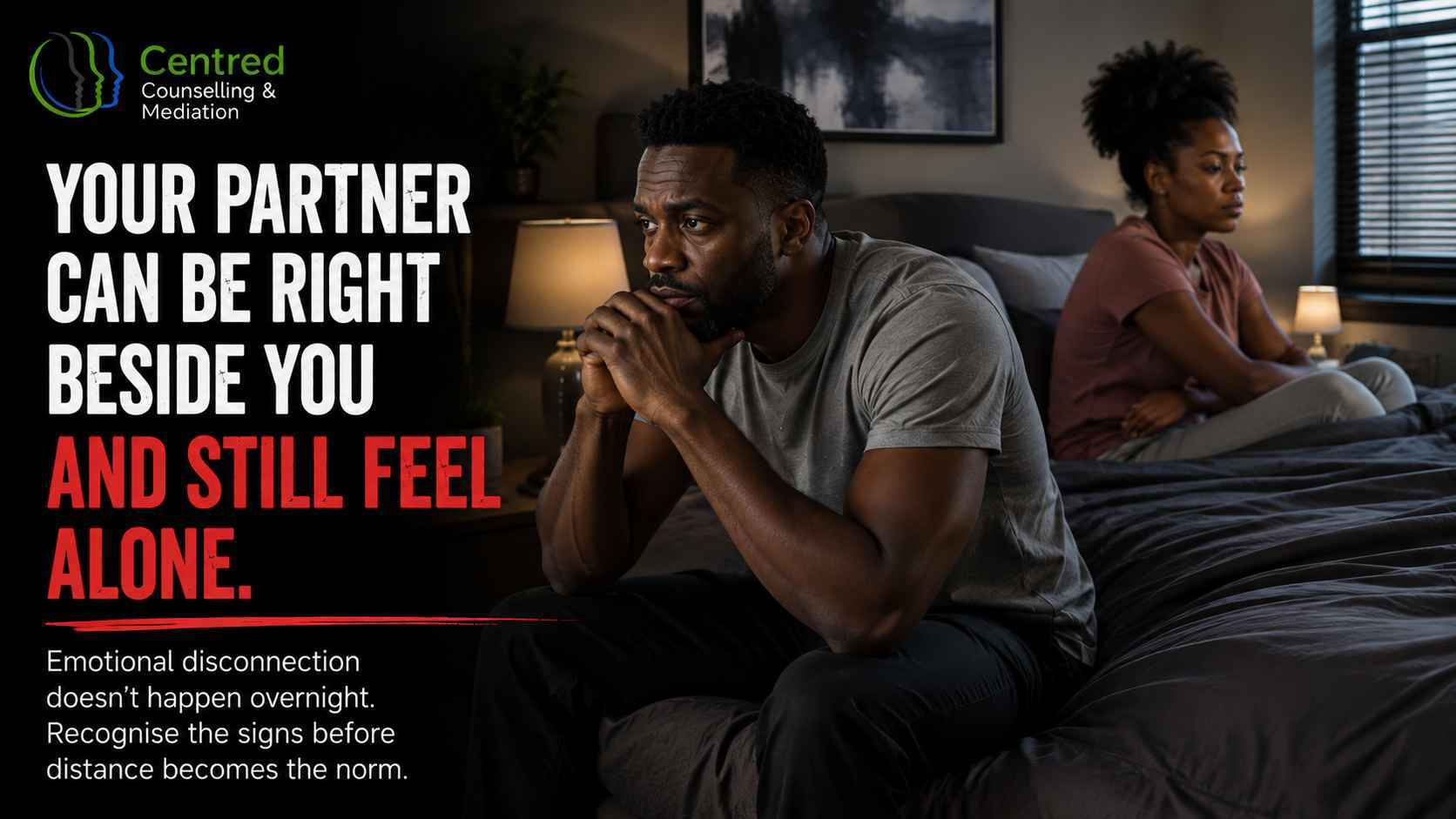
Relationships rarely collapse overnight; they erode gradually.
Sometimes life gets in the way. Imagine a woman who experiences recurring urinary tract infections (UTIs). Intercourse becomes painful, so naturally, intimacy decreases while treatment takes priority.
Months become years. Physical affection doesn't return. Eventually, neither partner reaches for the other's hand anymore. The hugs become less frequent, kisses disappear, cuddles stop, and emotional conversations fade.
The original medical issue may have started the distance, but the lack of communication allowed it to stay.
"We Never Fight"
This is one of the most common things I hear in counselling.
People often believe that never arguing means they have a healthy relationship. Yet, when I ask what they actually talk about, the conversations are often little more than surface-level feedback:
- “That's nice.”
- “I understand.”
- “Good for you.”
Healthy communication isn't simply acknowledging what someone says. It's becoming curious, asking questions, and exploring another person's inner world.
Communication Creates Connection
When conversations become limited to bills, children, work schedules, and household responsibilities, couples quietly become efficient roommates instead of emotionally connected partners.
Intimacy Is Much Bigger Than Sex
Sex is only one expression of intimacy. True intimacy includes:
- Holding hands
- Hugging after a difficult day
- Sitting together without distractions
- Saying “I appreciate you”
- Laughing together
- Feeling emotionally safe enough to be vulnerable
When these moments disappear, sexual intimacy usually follows—not the other way around.
Why Affairs Feel So Powerful
Sometimes people aren't falling in love with someone new. They're falling back in love with the feeling of emotional connection.
Before You Decide to Cheat... Ask Yourself:
- Have I honestly communicated what I've been feeling?
- Does my partner truly understand how disconnected I feel?
- Have I stopped showing affection myself?
- Have I become more focused on criticism than curiosity?
- Am I looking for another person—or the connection I've lost?
The Psychology Behind It
Human beings are wired for emotional connection. When those needs go unmet for long enough, our brains naturally become more receptive to anyone who appears to meet them. That doesn't make cheating inevitable, but it does signal that something important has been neglected.
Final Thoughts
Most people don't wake up one morning determined to have an affair. They slowly drift towards someone who makes them feel emotionally alive again.
Before looking outside your relationship for what feels missing, ask whether you've both stopped building it together.
Sometimes the spark isn't gone—it's simply been buried beneath years of routine, silence, and assumptions.
The good news is that connection can often be rebuilt—provided both partners are willing to start talking again.
Let's get you back on track!
Byron Werbeloff
Centred Counselling
Counselling & Family Mediation Services
📞 +27 84 485 3541
🌐 https://www.centredcounselling.co.za/
✉️ info@centredcounselling.co.za
Follow us:
TikTok: www.tiktok.com/@centred.counselli
YouTube: https://www.youtube.com/@CentredCounselling
Instagram: https://www.instagram.com/centred_counselling
Facebook: https://www.facebook.com/share/1AtmNzrAEo/?mibextid=wwXIfr
Pinterest: https://pin.it/i0CksW39W