
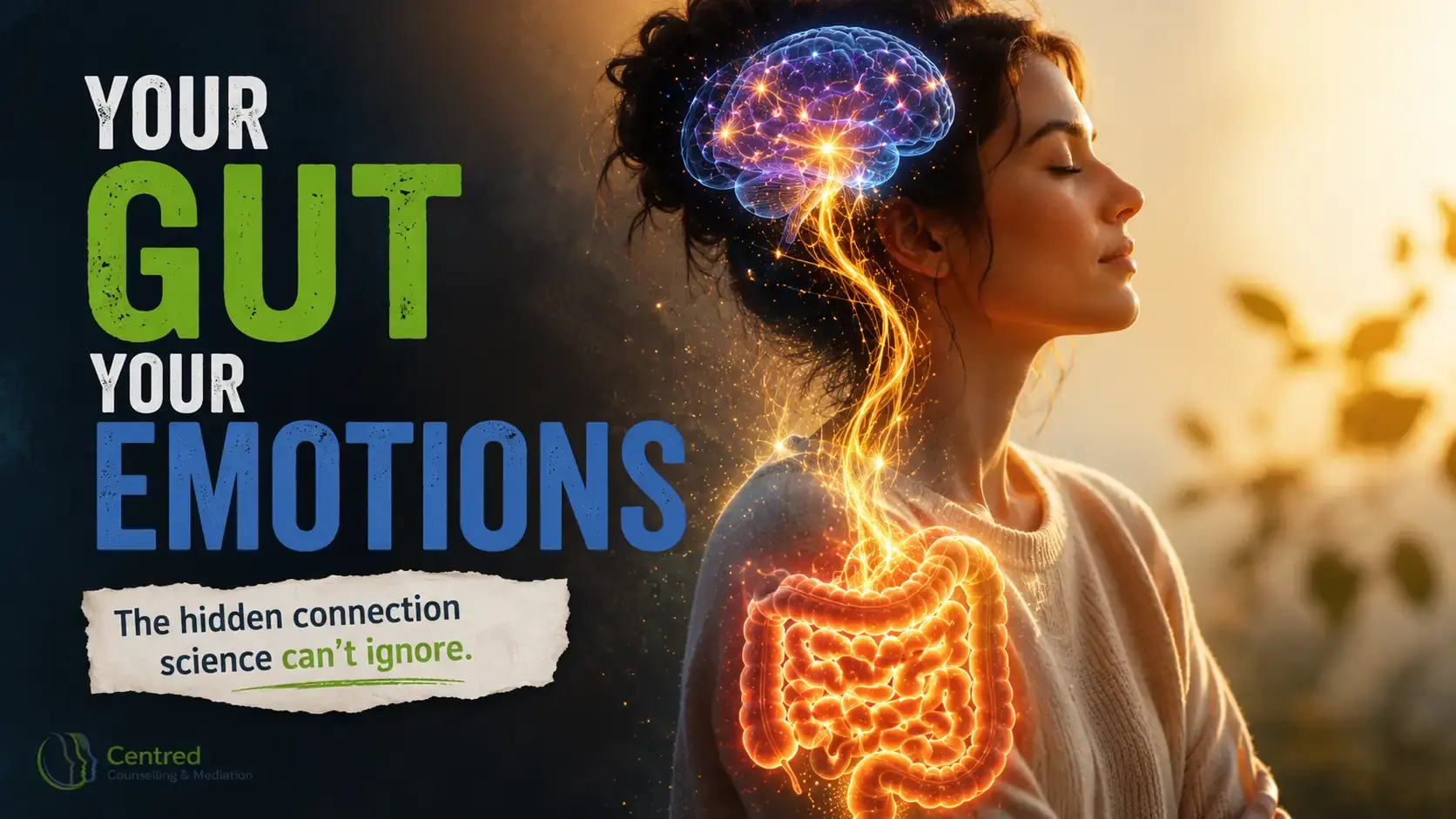
Your Gut and Your Emotions: The Powerful Connection Between the Gut and the Brain
For many years, mental health was viewed as something that existed almost entirely “in the mind.” But modern research is revealing something far more complex: your gut and your brain are in constant communication.
Scientists now refer to this relationship as the gut-brain axis — a two-way communication system linking the digestive system, nervous system, immune system, hormones, and even the bacteria living inside the gut.
One of the most surprising findings? More than 90% of the body’s serotonin is produced in the gut, not the brain. (nature.com)
Serotonin is a neurotransmitter involved in:
- Mood regulation
- Emotional stability
- Sleep and appetite
- Stress responses
- Motivation and emotional resilience
This does not mean the gut “creates happiness” on its own, but it does show that the digestive system plays a major role in the chemistry connected to emotional wellbeing.
The Gut Is Sometimes Called the “Second Brain”
Inside the digestive tract is a massive network of nerves known as the enteric nervous system. Researchers sometimes refer to it as the “second brain” because it contains hundreds of millions of neurons that communicate directly with the brain through pathways such as the vagus nerve. (hopkinsmedicine.org)
This communication works in both directions:
- The brain can affect the gut
- The gut can affect the brain
This is why emotional stress can sometimes lead to nausea, stomach cramps, diarrhoea, appetite changes, or “butterflies” in the stomach. But researchers are now discovering the reverse may also happen: gut dysfunction and imbalances in gut bacteria may influence mood, anxiety, stress responses, and emotional regulation. (frontiersin.org)
Your Gut Contains Trillions of Microorganisms
The human gut contains trillions of bacteria, fungi, and microorganisms collectively known as the gut microbiome. These microbes do far more than help digest food. Research suggests gut bacteria may influence:
- Serotonin production and dopamine activity
- GABA signalling (a calming neurotransmitter)
- Inflammation levels and immune functioning
- Stress hormone responses and brain signalling pathways (nature.com)
Some researchers now believe that disruptions in the microbiome — sometimes called gut dysbiosis — may contribute to conditions such as anxiety, depression, chronic stress, brain fog, fatigue, and emotional dysregulation. (frontiersin.org)
What Happens When Large Parts of the Gut Are Removed?
One of the most fascinating — and often overlooked — areas of gut-brain research involves people who have undergone major bowel surgeries, including partial or near-total removal of sections of the intestines.
Researchers and clinicians have observed that many patients experience not only physical changes, but also significant emotional and psychological difficulties after these procedures. Studies involving people with colectomies (removal of the colon), ileostomies, short bowel syndrome, and severe inflammatory bowel disease surgeries have reported increased rates of:
- Depression and anxiety
- Emotional distress
- Fatigue and cognitive difficulties
- Reduced quality of life (nih.gov, sciencedirect.com)
Researchers believe several mechanisms may contribute to this:
1. Disruption of the Gut Microbiome
Removing parts of the intestines can dramatically alter the gut microbiome. This may affect serotonin pathways, inflammation levels, stress hormone activity, and communication along the gut-brain axis. Some studies suggest that disruptions in gut bacteria are associated with worsened mood regulation and higher levels of anxiety and depression. (nature.com)
2. Changes in Serotonin Production
A large percentage of the body’s serotonin is produced in the gastrointestinal tract, particularly by specialised cells in the intestines. When significant portions of the gut are removed or damaged, serotonin signalling and regulation may potentially be affected. (nature.com)
3. Chronic Inflammation and Immune Activation
Many people requiring bowel surgery already suffer from chronic inflammatory conditions such as Crohn’s disease or ulcerative colitis. Inflammation itself has increasingly been linked to depression, anxiety, and fatigue. (pmc.ncbi.nlm.nih.gov)
4. Emotional and Nervous System Stress
Major gastrointestinal surgery can also profoundly affect body image, stress levels, daily functioning, social confidence, sleep, and eating behaviours, leading to increased emotional distress and social anxiety. (frontiersin.org)
These findings do not mean the gut alone “controls” emotions. Human emotions are enormously complex and involve genetics, trauma, stress, relationships, hormones, brain chemistry, physical health, and life experiences. However, research involving major gut disruption provides strong evidence that the digestive system plays a far more important role in emotional wellbeing than previously believed.
Inflammation and Mental Health
Poor gut health may increase inflammation throughout the body, and chronic inflammation has increasingly been linked to mental health difficulties. (pmc.ncbi.nlm.nih.gov)
When the gut barrier becomes compromised — sometimes referred to informally as “leaky gut” — inflammatory substances may enter the bloodstream more easily, potentially affecting brain functioning and stress responses. Researchers are currently studying how this inflammatory process may contribute to:
- Depression and anxiety disorders
- Stress sensitivity
- Cognitive difficulties and emotional instability
While research is still developing, the connection appears significant enough that many scientists now view mental health through a far more holistic lens than in the past.
Stress Can Damage the Gut Too
The gut-brain axis works both ways. Chronic psychological stress can negatively affect digestion, gut bacteria diversity, appetite regulation, inflammation, and intestinal functioning. (med.stanford.edu)
┌────────────────────────────────────────┐ │ Chronic Psychological Stress │ └───────────────────┬────────────────────┘ ▼ ┌────────────────────────────────────────┐ │ Negative Impact on Digestion, │ │ Microbiome, & Gut Inflammation │ └───────────────────┬────────────────────┘ ▼ ┌────────────────────────────────────────┐ │ Altered Neurotransmitter Signalling │ │ & Heightened Emotional Distress │ └───────────────────┬────────────────────┘ ▼ ┌────────────────────────────────────────┐ │ Increased Susceptibility to Stress │ └────────────────────────────────────────┘ Over time, this continuous cycle may contribute to worsening mental and physical wellbeing.
What the Research Is Finding About Mental Health
Emerging research has found that people with depression and anxiety often show differences in their gut microbiome compared to healthy individuals. (frontiersin.org)
Some studies involving probiotics and microbiome-targeted interventions have shown reductions in anxiety behaviours, stress hormones, and depressive symptoms. (mdpi.com) However, scientists also caution that this field is still evolving. The gut microbiome is incredibly complex, and there is no single “magic bacteria” responsible for mental health.
What is becoming increasingly clear, however, is that mental health cannot be separated from physical health. The brain, immune system, nervous system, hormones, sleep, nutrition, stress levels, and gut health all interact together.
Supporting Gut Health May Support Emotional Wellbeing
Although gut health is not a replacement for therapy, medication, or professional mental health treatment, research suggests the following may positively support the gut-brain axis:
- Eating fibre-rich whole foods and including fermented foods where appropriate
- Reducing ultra-processed foods
- Managing chronic stress and seeking support for chronic anxiety
- Improving sleep quality
- Regular exercise and staying hydrated (businessinsider.com)
Mental health is rarely caused by one single factor. But the growing science around the gut-brain axis reminds us that emotional wellbeing is deeply connected to the body as a whole.
Final Thoughts
The idea that the gut influences emotions may once have sounded strange. Today, it is one of the fastest-growing areas of neuroscience and mental health research.
Your gut is not just involved in digestion. It is connected to mood, stress, sleep, emotional regulation, brain chemistry, and nervous system functioning. The emerging science is sending a powerful message: Taking care of your body may also be part of taking care of your mind.
Centred Counselling
Counselling & Family Mediation Services
- 📞 +27 84 485 3541
- 🌐 https://www.centredcounselling.co.za/
- ✉️ info@centredcounselling.co.za
Follow us:
- TikTok: www.tiktok.com/@centred.counselli
- YouTube: https://www.youtube.com/@CentredCounselling
- Instagram: https://www.instagram.com/centred_counselling
- Facebook: https://www.facebook.com/share/1AtmNzrAEo/?mibextid=wwXIfr
- Pinterest: https://pin.it/i0CksW39W
- Threads: https://www.threads.com/@centred_counselling