---
title: "Alpha-Gal Syndrome: Red Meat Allergy from Ticks | Centred Counselling"
description: Discover Alpha-Gal Syndrome, the tick bite that causes a red meat allergy. Learn about its delayed symptoms, brain fog, and coping with chronic health anxiety.
image: https://www.centredcounselling.co.za/hubfs/Alpha-Gal-Syndrome-Header-Under100KB.jpg
---
1332 Naivasha Road, Sunninghill
[info@centredcounselling.co.za](mailto:info@centredcounselling.co.za)
[084 485 3541](https://wa.me/27844853541)
[](https://www.centredcounselling.co.za/)
- [Home](https://www.centredcounselling.co.za)
- [About Me](https://www.centredcounselling.co.za/about-me)
- [Articles](https://www.centredcounselling.co.za/article)
- [Counselling](https://www.centredcounselling.co.za/counselling)
- [All Counselling Services](https://www.centredcounselling.co.za/counselling)
- [ADHD Counselling](https://www.centredcounselling.co.za/adhd-counselling-sunninghill)
- [Anger Management](https://www.centredcounselling.co.za/anger-management-sunninghill)
- [Chronic Pain Counselling](https://www.centredcounselling.co.za/chronic-pain-counselling-centred-counselling)
- [Grief Counselling](https://www.centredcounselling.co.za/grief-counselling-sunninghill)
- [LGBTQ+](https://www.centredcounselling.co.za/lgbtq-counselling-in-sandton-centred-counselling-mediation)
- [Marriage Counselling](https://www.centredcounselling.co.za/marriage-counselling-in-sunninghill-sandton-centred-counselling)
- [Porn Addiction](https://www.centredcounselling.co.za/porn-addiction-counselling-in-sandton-centred-counselling)
- [Premarital Counselling](https://www.centredcounselling.co.za/premarital-counselling-in-sunninghill-sandton-centred-counselling)
- [Relationship Counselling](https://www.centredcounselling.co.za/relationship-counselling-in-sunninghill-centred-counselling)
- [Mediation](https://www.centredcounselling.co.za/mediation)
- [Video Resources](https://www.centredcounselling.co.za/mental-health-vlogs-video-resources)
- [Contact](https://www.centredcounselling.co.za/contact-us)
- [Book NOW](https://www.centredcounselling.co.za/booking)
[BOOK NOW](https://www.centredcounselling.co.za/booking) [WHATSAPP US](https://wa.me/27844853541)
[Science](https://www.centredcounselling.co.za/centred-counselling-blog/tag/science)
# Alpha-Gal Syndrome: Red Meat Allergy from Ticks | Centred Counselling

Byron Werbeloff
Author
Jun 29, 2026, 2:22:11 AM
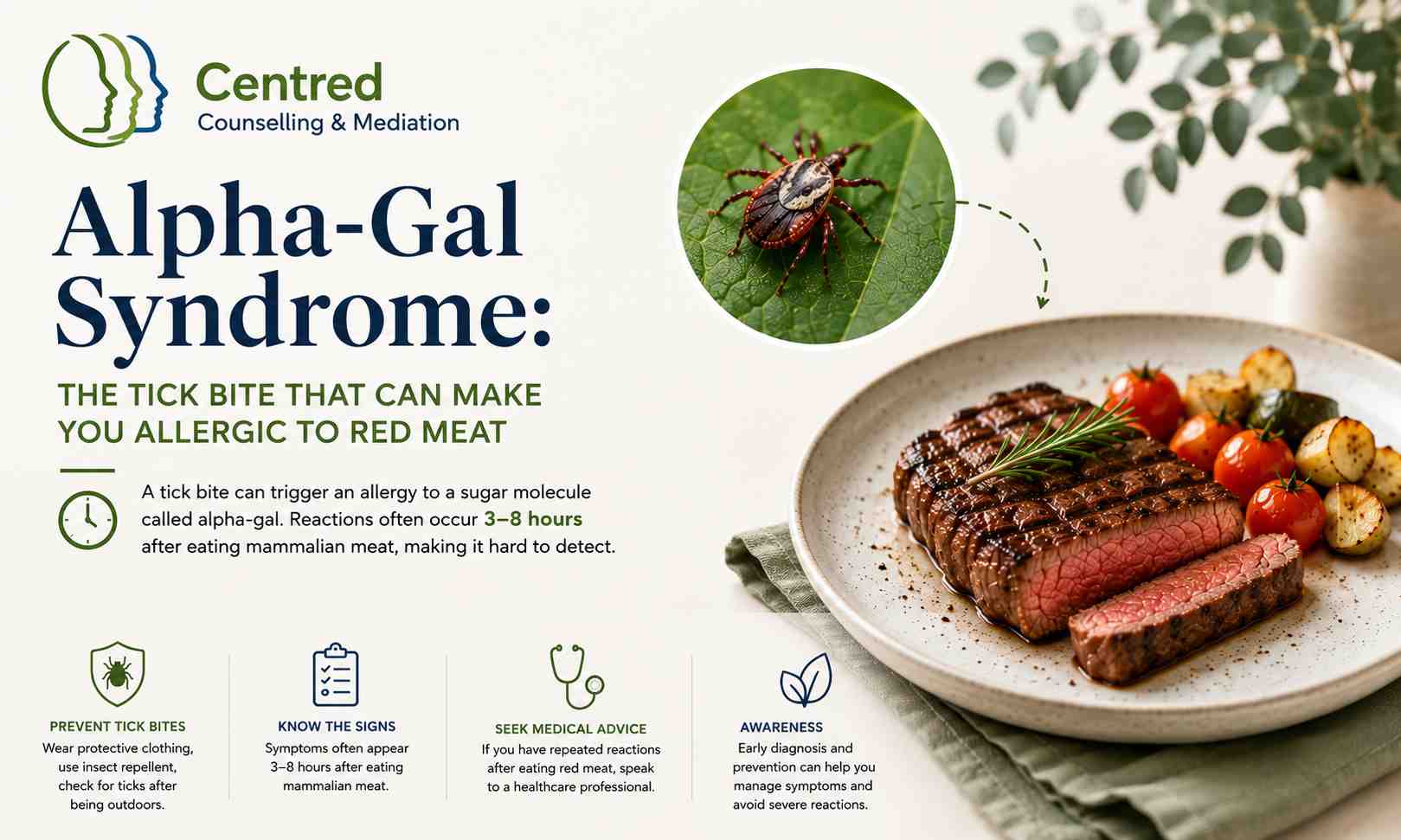
# Alpha-Gal Syndrome: The Tick Bite That Can Make You Allergic to Red Meat
### In This Article, You'll Learn:
- **What** Alpha-Gal Syndrome is and how it develops.
- **Why** symptoms often appear hours after eating meat.
- **The common** signs and symptoms to look out for.
- **How** Alpha-Gal Syndrome is diagnosed and treated.
- **When** you should seek medical attention.
Most people think of tick bites as being little more than an itchy inconvenience. Others associate them with infections such as tick bite fever. However, there is another condition that is becoming increasingly recognised around the world—and one that surprises both patients and healthcare professionals.
Imagine eating a steak you've enjoyed your entire life, only to wake up in the middle of the night covered in hives, struggling to breathe, or experiencing severe stomach pain. You may never suspect that a tick bite from months earlier could be responsible.
This condition is known as **Alpha-Gal Syndrome (AGS)**.
## What Is Alpha-Gal Syndrome?
Alpha-Gal Syndrome is an allergic reaction to a naturally occurring sugar molecule called galactose-α-1,3-galactose, commonly shortened to **alpha-gal**. This sugar is found in the meat of most mammals, including beef, pork, lamb, venison, and goat.
After certain tick bites, the immune system can mistakenly begin treating alpha-gal as a harmful substance. The next time the person eats mammalian meat—or, in some cases, consumes dairy products or gelatin—the immune system may trigger an allergic reaction.
Unlike most food allergies, Alpha-Gal Syndrome does not usually cause immediate symptoms. Instead, **reactions often occur three to eight hours after eating**, making the connection between the food and the allergy much more difficult to recognize.
## What Causes It?
Researchers believe that certain species of ticks introduce alpha-gal into the body while feeding. The immune system then produces antibodies against the sugar molecule.
Once this sensation has occurred, eating mammalian meat can trigger the release of histamine and other inflammatory chemicals responsible for allergic reactions.
Repeated tick bites may increase the severity of the allergy and prolong how long it lasts.
## Common Symptoms
Symptoms vary widely between individuals. Some people experience mild itching, while others develop life-threatening allergic reactions.
### Common symptoms include:
- Hives or an itchy skin rash
- Swelling of the lips, tongue, throat, or face
- Nausea and vomiting
- Abdominal pain and cramping
- Diarrhea
- Wheezing or difficulty breathing
- Dizziness or fainting
- Brain fog, including difficulty concentrating, slowed thinking, memory problems, or feeling mentally "cloudy"
- Fatigue or extreme tiredness
- Anaphylaxis, a medical emergency requiring immediate treatment
Many people with Alpha-Gal Syndrome also report cognitive symptoms such as brain fog, difficulty concentrating, forgetfulness, and overwhelming fatigue. These symptoms may occur alongside an allergic reaction or, in some cases, be the most noticeable feature. Although brain fog is increasingly recognized by clinicians and patients, its exact cause is still being studied.
Because symptoms often appear several hours after eating, many people mistakenly blame food poisoning, stress, or an unrelated illness.
## Which Foods Can Trigger Alpha-Gal Syndrome?
### The most common triggers include:
- Beef
- Pork
- Lamb
- Goat
- Venison
- Organ meats
### Some individuals may also react to:
- Gelatin
- Certain dairy products
- Animal-derived ingredients found in some medications or medical products
Not everyone reacts to every mammalian product, so triggers can differ significantly from person to person.
## How Is It Diagnosed?
Diagnosis begins with a detailed medical history, especially if allergic reactions consistently occur several hours after eating red meat.
### A healthcare provider may recommend:
- Blood tests measuring alpha-gal-specific IgE antibodies
- Allergy assessment
- Review of recent tick exposure
- Food and symptom diary
Because the condition is still relatively unfamiliar to many people, diagnosis is sometimes delayed for months or even years.
## Treatment
There is currently no cure for Alpha-Gal Syndrome. Treatment focuses on preventing allergic reactions by avoiding foods and products that trigger symptoms.
Depending on the severity of previous reactions, your healthcare provider may recommend carrying an adrenaline (epinephrine) auto-injector in case of accidental exposure.
Equally important is preventing future tick bites through protective clothing, insect repellents, and careful tick checks after spending time outdoors.
Some people find that their sensitivity gradually decreases over several years if they successfully avoid further tick bites.
## Living With Alpha-Gal Syndrome
Receiving a diagnosis can be emotionally overwhelming. Many people suddenly have to change lifelong eating habits, carefully read food labels, and remain alert for hidden animal ingredients in foods, medications, and personal care products.
The uncertainty surrounding delayed allergic reactions can also create anxiety around eating and social situations.
Learning about the condition, working closely with healthcare professionals, and developing practical management strategies can greatly improve confidence and quality of life.
## When Should You Seek Medical Attention?
You should seek medical assessment if you develop repeated allergic reactions after eating red meat, particularly if symptoms occur several hours later.
> ⚠️ **Seek emergency medical care immediately** if you experience difficulty breathing, swelling of the throat, collapse, or signs of anaphylaxis.
Early diagnosis can help prevent future severe reactions and allow you to safely manage the condition.
## Final Thoughts
Alpha-Gal Syndrome reminds us that something as seemingly insignificant as a tick bite can have unexpected long-term effects on the immune system. While the condition remains relatively uncommon, awareness is growing as more cases are recognised worldwide.
If you notice delayed allergic reactions after eating mammalian meat, don't ignore the pattern. Speaking with your healthcare provider could lead to an accurate diagnosis and significantly reduce your risk of future serious reactions.
## Let's Get You Back on Track!
Living with a chronic illness or an unexpected diagnosis can affect far more than your physical health. The uncertainty, lifestyle changes, and anxiety that often accompany conditions like Alpha-Gal Syndrome can take a significant emotional toll.
At Centred Counselling & Mediation, we provide compassionate counselling to help individuals cope with chronic illness, health anxiety, life transitions, and the emotional impact of medical conditions. Together, we can develop practical coping strategies, improve resilience, and help you regain confidence in daily life.
### Centred Counselling & Mediation
- 📍 Sunninghill, Johannesburg (In-person & Online Sessions)
- 📞 078 749 7120
- 🌐 www.centredcounselling.co.za
**Tagged with:** [Science](https://www.centredcounselling.co.za/centred-counselling-blog/tag/science)

#### Byron Werbeloff
KEEP READING
## Related Articles
[](https://www.centredcounselling.co.za/centred-counselling-blog/panic-attack-help-grounding-tips-relief-centred-counselling)
May 7, 2026, 1:31:49 AM Byron Werbeloff
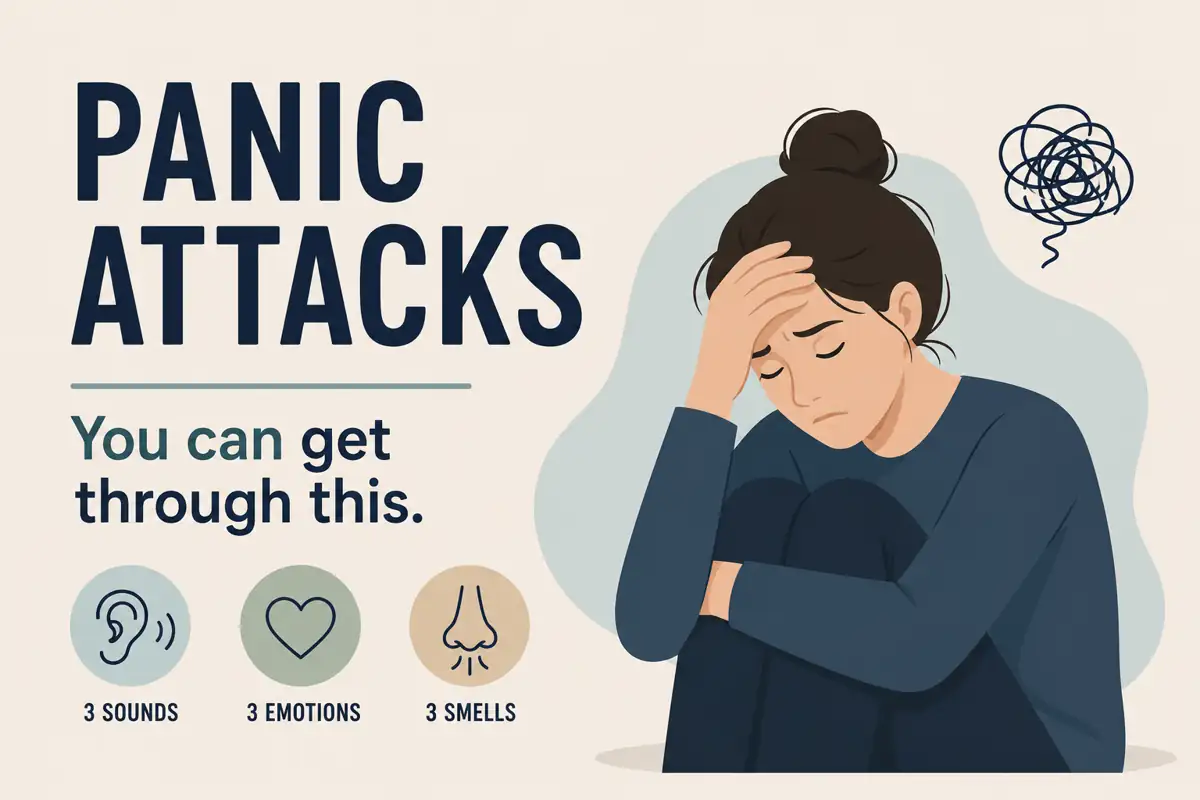
### [Panic Attack Help: Grounding Tips & Relief | Centred Counselling](https://www.centredcounselling.co.za/centred-counselling-blog/panic-attack-help-grounding-tips-relief-centred-counselling)
# Panic Attacks Feel Terrifying — But You *Can* Regain Control
A panic attack can feel like your body is shutting down.Your chest tightens....
[READ FULL ARTICLE](https://www.centredcounselling.co.za/centred-counselling-blog/panic-attack-help-grounding-tips-relief-centred-counselling)
[](https://www.centredcounselling.co.za/centred-counselling-blog/why-you-cant-just-be-disciplined-with-adhd)
May 12, 2026, 7:49:19 AM Byron Werbeloff
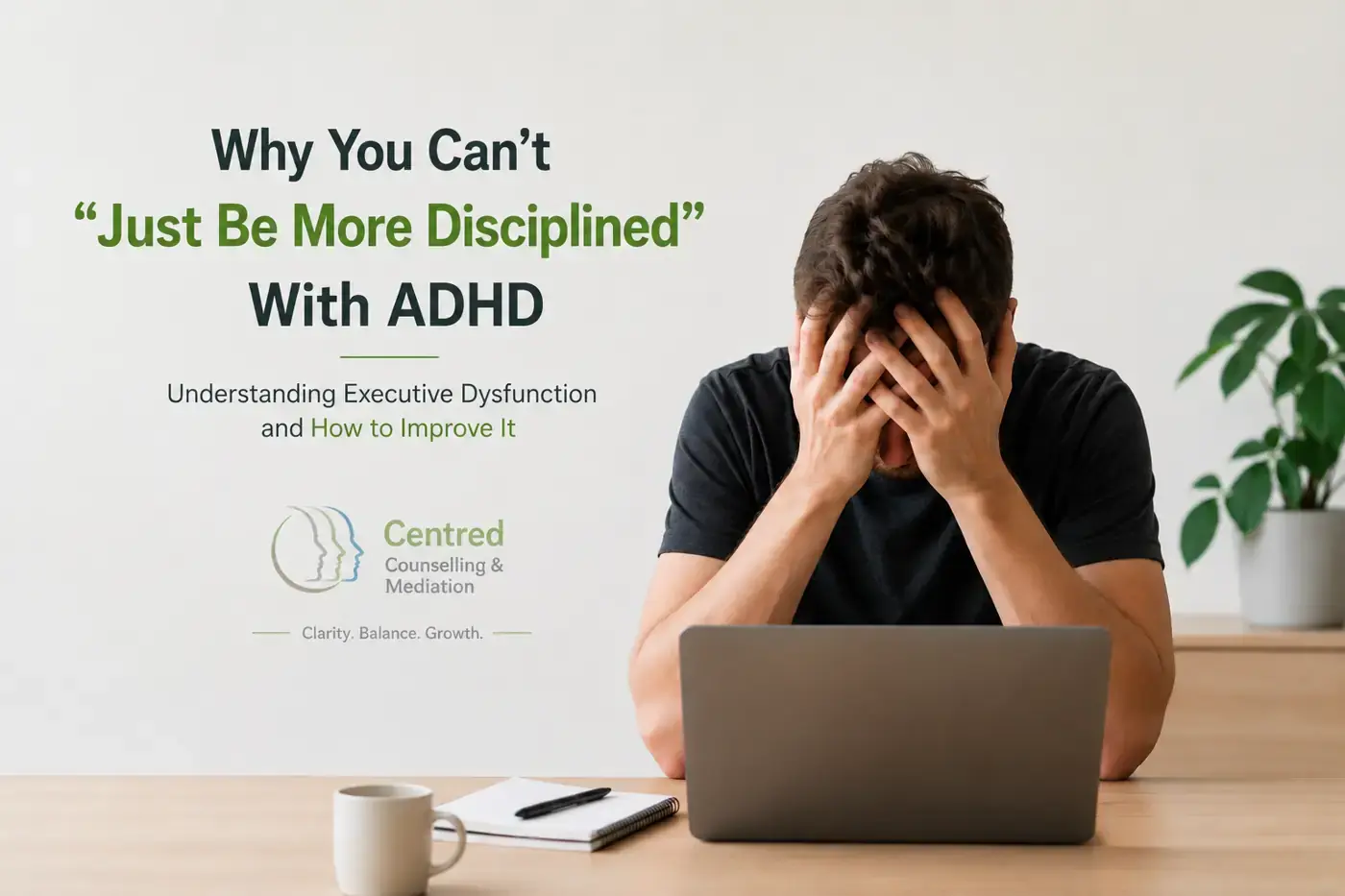
### [Why You Can’t “Just Be Disciplined” With ADHD](https://www.centredcounselling.co.za/centred-counselling-blog/why-you-cant-just-be-disciplined-with-adhd)
## Why You Can’t “Just Be More Disciplined” With ADHD
### Understanding Executive Dysfunction and How to Improve It
Many people with ADHD grow up...
[READ FULL ARTICLE](https://www.centredcounselling.co.za/centred-counselling-blog/why-you-cant-just-be-disciplined-with-adhd)
[](https://www.centredcounselling.co.za/centred-counselling-blog/medical-imaging-mental-health-can-we-see-the-human-mind-centred-counselling)
May 7, 2026, 1:26:47 AM Byron Werbeloff
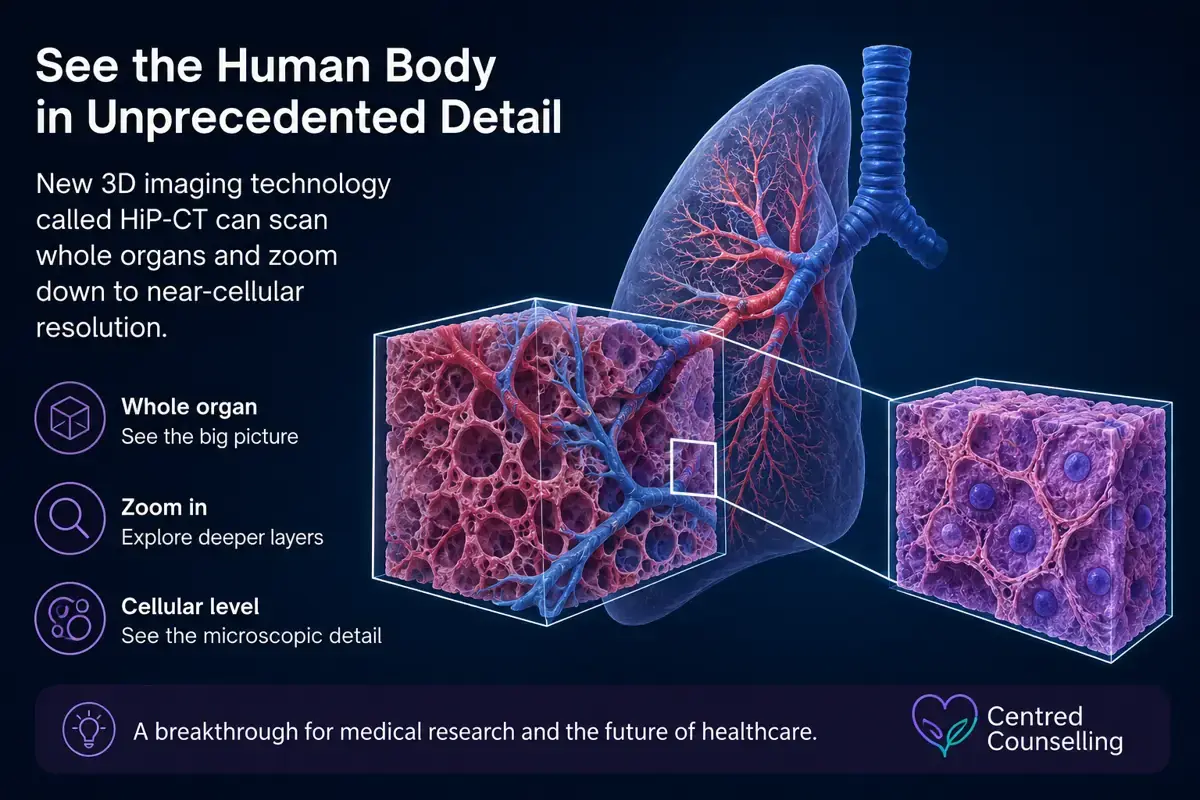
### [Medical Imaging & Mental Health: Can We See the Human Mind? | Centred Counselling](https://www.centredcounselling.co.za/centred-counselling-blog/medical-imaging-mental-health-can-we-see-the-human-mind-centred-counselling)
# **The Future of Medical Imaging: Can We Really See Inside the Human Body at a Cellular Level?**
A new scientific breakthrough has been making...
[READ FULL ARTICLE](https://www.centredcounselling.co.za/centred-counselling-blog/medical-imaging-mental-health-can-we-see-the-human-mind-centred-counselling)

Empowering individuals and couples through evidence-based counselling and mediation. Registered ASCHP professional (WC24/9024).
Quick Links
- [Home](https://www.centredcounselling.co.za)
- [About Me](https://www.centredcounselling.co.za/about-me)
- [Articles](https://www.centredcounselling.co.za/article)
- [Counselling](https://www.centredcounselling.co.za/counselling)
- [Mediation](https://www.centredcounselling.co.za/mediation)
- [Video Resources](https://www.centredcounselling.co.za/mental-health-vlogs-video-resources)
- [Contact](https://www.centredcounselling.co.za/contact-us)
- [Book NOW](https://www.centredcounselling.co.za/booking)
Resources
- [FAQ](https://www.centredcounselling.co.za/counselling#faq)
- [FAQ Mediation](https://www.centredcounselling.co.za/mediation#faq)
- [Downloads](https://www.centredcounselling.co.za/article#resources)
- [Cookie Policy](https://www.centredcounselling.co.za/terms-conditions-policies#cookies)
- [Privacy Policy](https://www.centredcounselling.co.za/terms-conditions-policies#privacy)
- [Terms and Conditions](https://www.centredcounselling.co.za/terms-conditions-policies#terms)
Get in Touch
Call Us [084 485 3541](tel:0844853541)
WhatsApp [Chat with us](https://wa.me/27844853541)
Email Us [info@centredcounselling.co.za](mailto:info@centredcounselling.co.za)
© 2026 Centred Counselling & Mediation. All rights reserved.
[Design by SEO Website Design](https://www.seowebsitedesign.co.za)
[Chat with us](https://wa.me/27844853541)
```json
{
"@context" : "https://schema.org",
"@type" : "BlogPosting",
"author" : {
"@type" : "Person",
"name" : "Byron Werbeloff",
"url" : "https://www.centredcounselling.co.za/centred-counselling-blog/author/byron-werbeloff"
},
"dateModified" : "2026-06-29T06:33:14.948Z",
"datePublished" : "2026-06-29T06:22:11.000Z",
"headline" : "Alpha-Gal Syndrome: Red Meat Allergy from Ticks | Centred Counselling",
"image" : [ "https://www.centredcounselling.co.za/hubfs/Alpha-Gal-Syndrome-Header-Under100KB.jpg" ],
"mainEntityOfPage" : {
"@id" : "https://www.centredcounselling.co.za/centred-counselling-blog/alpha-gal-syndrome-red-meat-allergy-from-ticks-centred-counselling",
"@type" : "WebPage"
},
"publisher" : {
"@type" : "Organization",
"logo" : {
"@type" : "ImageObject",
"url" : "https://www.centredcounselling.co.za/hubfs/logo.jpeg"
},
"name" : "Centred Counselling"
}
}
```
```json
{
"@context": "https://schema.org",
"@type": "LocalBusiness",
"name": "Centred Counselling & Mediation",
"image": "https://www.centredcounselling.co.za/hubfs/logo1.png",
"@id": "https://www.centredcounselling.co.za",
"url": "https://www.centredcounselling.co.za",
"telephone": "0844853541",
"email": "info@centredcounselling.co.za",
"address": {
"@type": "PostalAddress",
"streetAddress": "153A 9th Avenue",
"addressLocality": "Highlands North",
"addressRegion": "Johannesburg",
"postalCode": "2192",
"addressCountry": "ZA"
},
"geo": {
"@type": "GeoCoordinates",
"latitude": -26.1368,
"longitude": 28.0841
},
"openingHoursSpecification": {
"@type": "OpeningHoursSpecification",
"dayOfWeek": [
"Monday",
"Tuesday",
"Wednesday",
"Thursday",
"Friday"
],
"opens": "08:00",
"closes": "18:00"
},
"sameAs": [
"https://www.facebook.com/profile.php?id=61573738539849",
"https://www.instagram.com/centred_counselling/",
"https://www.linkedin.com/in/byron-werbeloff-475bb251/",
"https://www.tiktok.com/@centred.counselli"
],
"founder": {
"@type": "Person",
"name": "Byron Werbeloff",
}
}
```