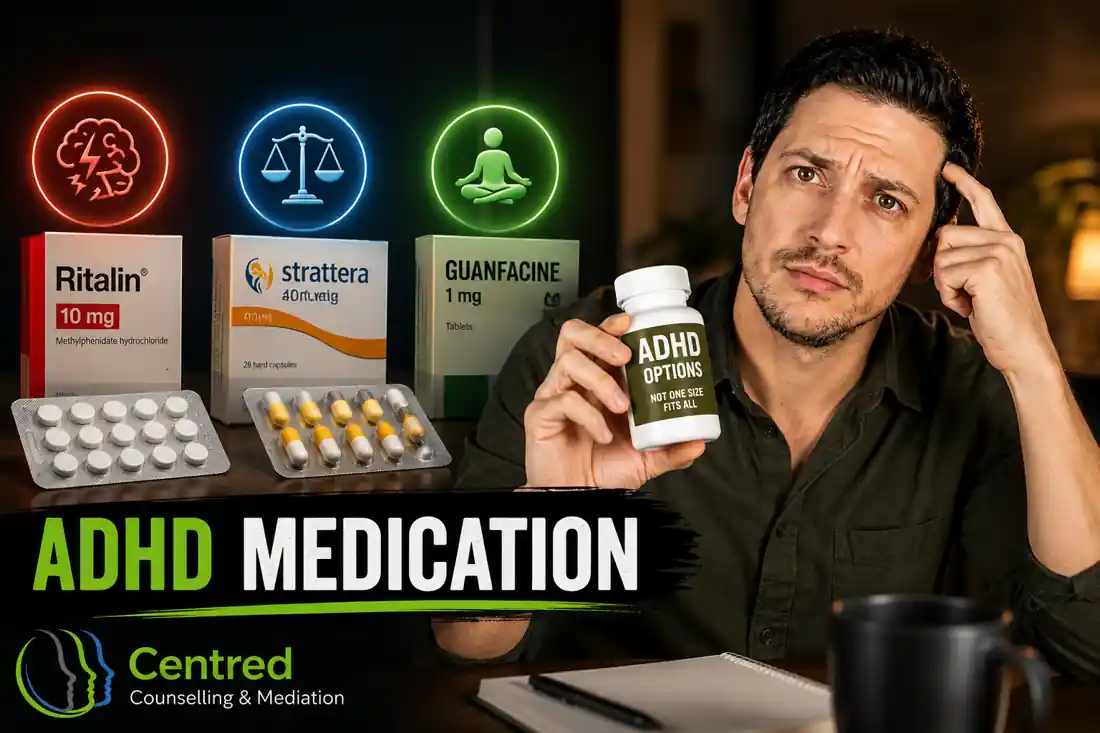
The 3 Categories of ADHD Medication Explained — And Why Different Types Work for Different People
“Why Can I Focus for 3 Hours on Something Random… But Not Start a 5-Minute Task?”
If you’ve ever found yourself hyperfocusing on something completely unimportant for hours, procrastinating until panic mode activates, or struggling to start basic tasks until deadlines become dangerous… then you may understand one of the most misunderstood parts of ADHD.
ADHD is not simply about “not paying attention.” In fact, many people with ADHD can focus extremely intensely. The real issue is often:
- Task initiation
- Attention regulation
- Dopamine regulation
- Executive functioning
- Impulse control
- Emotional regulation
For many people, ADHD medication can dramatically reduce the daily friction that makes life feel exhausting.
ADHD Is a Misleading Name
ADHD stands for: Attention Deficit Hyperactivity Disorder. But this name can be quite misleading. Many adults with ADHD are not physically hyperactive and may appear calm externally. Instead, the hyperactivity is often internal:
- Racing thoughts
- Mental restlessness
- Constant stimulation-seeking
- Emotional overwhelm
- Difficulty slowing the mind down
What ADHD Medication Actually Does
One of the biggest misconceptions is that ADHD medication “gives you discipline.” It does not. It helps the brain access:
- Focus and Follow-through
- Motivation and Task initiation
- Emotional regulation and Impulse control
Most ADHD medications primarily target Dopamine and Norepinephrine. These neurotransmitters play major roles in alertness, reward, focus, and executive functioning.
The 3 Main Categories of ADHD Medication
1. Stimulants
Stimulants are the most commonly prescribed and often considered first-line treatment. Common examples include:
- Ritalin / Concerta (Methylphenidate)
- Adderall / Vyvanse (Amphetamines)
What Do Stimulants Feel Like? Many describe it as: “My brain became quieter” or “I didn’t need panic to function anymore.” They often work very quickly, sometimes the same day.
Important Reality: They can have side effects like anxiety, sleep difficulties, appetite suppression, or a “Medication Drop-Off” (irritability or exhaustion as it wears off). In South Africa, these are highly regulated and require physical prescriptions and medical monitoring.
2. Non-Stimulants
A well-known example is Strattera. Unlike stimulants, non-stimulants primarily target Norepinephrine regulation.
What Do They Feel Like? People often describe them as smoother and more emotionally stabilising.
- The Biggest Difference: They do not work immediately. They build gradually and may take weeks before full effects are noticeable.
3. Alpha-2 Agonists
Examples include Guanfacine and Clonidine. These are often used for:
- Emotional regulation
- Impulsivity and Sleep issues
- Nervous system calming and Stress regulation
These medications help create calmness and emotional stability for those whose primary struggle is nervous system overload and internal chaos.
Can ADHD Medications Be Combined?
Yes—under medical supervision. Some individuals benefit from combining a stimulant (like Ritalin) with a non-stimulant (like Strattera) to balance focus with emotional stability and reduce medication crashes.
Medication Alone Is Not Enough
The goal of medication is reducing daily friction so that your effort matches your results. However, ADHD treatment works best when combined with:
- Therapy and Counselling
- ADHD-friendly routines
- Structure systems
- Healthy lifestyle management
Unmanaged ADHD can contribute to burnout, relationship strain, and self-esteem collapse. Research suggests ADHD is associated with significantly higher relationship strain when left unsupported.
If You’re Struggling…
Understanding how ADHD actually works can completely change the way you view yourself. You do not have to navigate it alone.
Important Disclaimer: This article is educational only and is not medical advice. Always consult a qualified healthcare professional before changing medication.
Byron Werbeloff Centred Counselling & Mediation
- 🌐 Website: centredcounselling.co.za
- 📞 Contact: +27 84 485 3541
Follow Centred Counselling: TikTok | YouTube | Instagram | Facebook | Pinterest | Threads