Panic Attacks Feel Terrifying — But You Can Regain Control
A panic attack can feel like your body is shutting down.
Your chest tightens. Your heart races. Your breathing changes. Your thoughts spiral.
Many people genuinely believe they are dying, losing control, or “going crazy” during a panic attack.
But here’s something important to understand:
A panic attack is not dangerous — even though it feels dangerous.
Your nervous system has entered a state of extreme alarm. The goal is not to “fight” the panic aggressively. The goal is to help your brain realise that you are safe again.
One of the fastest ways to do this is by grounding yourself back into the present moment.

A Simple Grounding Technique You Can Try
The next time you experience a panic attack, try this:
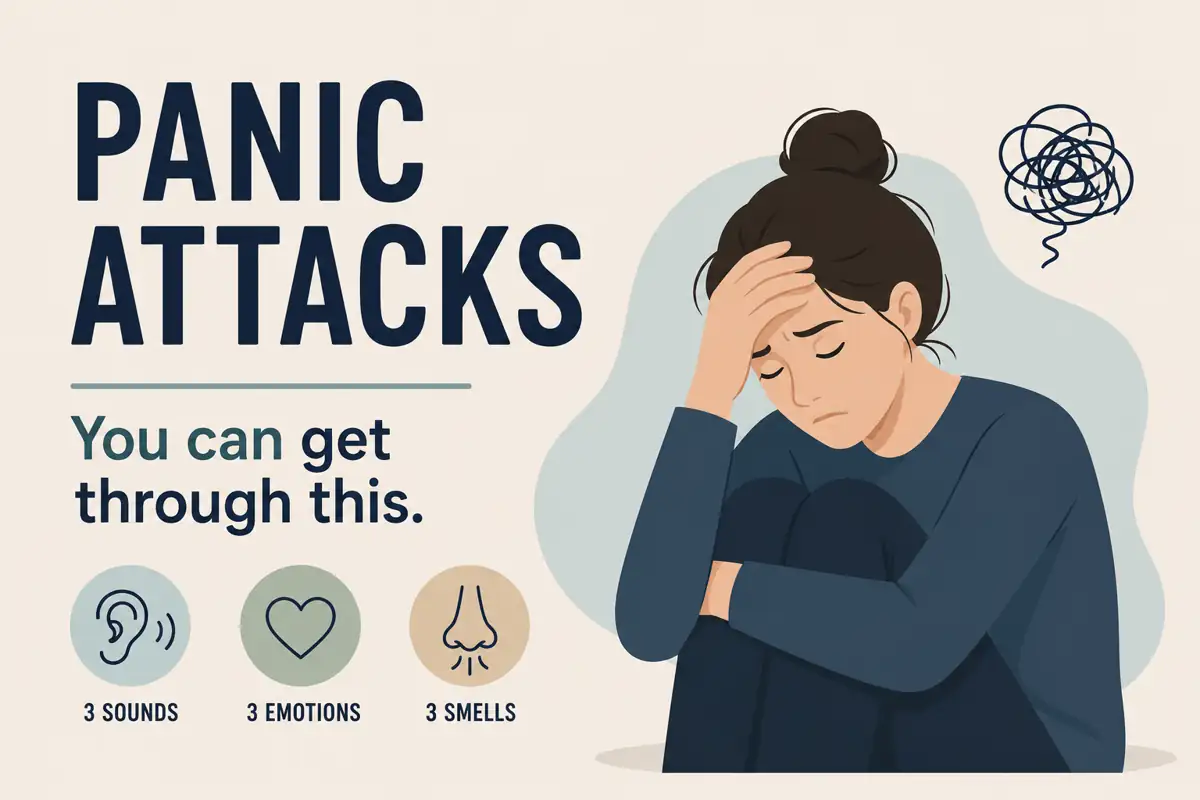
Step 1: Focus on 3 Sounds
Close your eyes for a moment and identify:
- 3 sounds you can hear
- Say them out loud
For example:
- “I hear cars outside.”
- “I hear the air conditioner.”
- “I hear birds.”
This interrupts the spiral of catastrophic thinking and reconnects your brain to reality.
Step 2: Name 3 Emotions
Next, say out loud:
- 3 emotions you are feeling right now
For example:
- “I feel scared.”
- “I feel overwhelmed.”
- “I feel embarrassed.”
Naming emotions helps calm the emotional centres of the brain. Research shows that simply labeling emotions can reduce their intensity.

Step 3: Notice 3 Smells
Now identify:
- 3 smells around you
For example:
- Freshly cut grass
- Deodorant or perfume
- Coffee
- Rain in the air
This activates sensory awareness and helps pull attention away from panic symptoms.
Why This Works
During a panic attack, your brain becomes trapped in threat mode.
Your attention narrows onto:
- Your heartbeat
- Your breathing
- Dizziness
- Fearful thoughts
- “What if something is wrong with me?”
Grounding techniques interrupt this cycle.
They force your brain to reconnect with the external environment instead of staying trapped inside fear.
Other Effective Ways to Stop or Reduce a Panic Attack
1. Cold Water or Temperature Shock
Cold stimulation can help calm the nervous system surprisingly quickly.
Try:
- Splashing cold water on your face
- Holding ice cubes
- Placing something cold on your neck or chest
This can activate the body’s “diving reflex,” which may help slow the heart rate and reduce physiological arousal.
2. Controlled Breathing
Many people unknowingly hyperventilate during panic attacks.
Try slowing your breathing intentionally:
- Inhale for 4 seconds
- Hold for 2 seconds
- Exhale slowly for 6 seconds
The long exhale is particularly important because it signals safety to the nervous system.
Do not force deep breaths aggressively — this can sometimes worsen dizziness.
3. Engage Your Body Physically
Panic creates trapped adrenaline.
Gentle physical movement can help discharge it.
Try:
- Walking slowly
- Stretching
- Shaking out your arms
- Pacing calmly
- Pressing your feet firmly into the floor
Your body is preparing for danger. Movement helps complete that stress cycle.
4. Use “Reality Statements”
Panic attacks create catastrophic thoughts such as:
- “I’m dying.”
- “I’m having a heart attack.”
- “I’m losing control.”
Counter these thoughts with calm, factual statements:
- “This is a panic attack.”
- “It will pass.”
- “My nervous system is overloaded right now.”
- “I am safe.”
This helps reduce the secondary fear that often escalates panic further.
5. Stop Fighting the Panic
Ironically, the harder people fight panic, the worse it often becomes.
Instead of:
- “I need this to stop RIGHT NOW.”
Try:
- “This is uncomfortable, but I can tolerate it.”
Acceptance reduces the fear response that fuels panic attacks.
When Panic Attacks Become Frequent
Occasional panic attacks are relatively common.
However, if you:
- Avoid places because of panic
- Fear having another attack constantly
- Experience ongoing anxiety
- Feel trapped by panic symptoms
…then it may be time to seek professional support.
Panic attacks are highly treatable, especially with:
- Cognitive Behavioural Therapy (CBT)
- Nervous system regulation techniques
- Exposure-based approaches
- Lifestyle and stress management
You do not have to live in constant fear of your own body.
Final Thoughts
A panic attack feels overwhelming because your nervous system genuinely believes you are in danger.
But feelings are not always facts.
The goal is not perfection.
The goal is learning how to guide your body back toward safety.
And the more you practice grounding techniques, the more confidence you build in your ability to handle panic when it arises.
Byron Werbeloff
Centred Counselling
🌐 Website: https://www.centredcounselling.co.za/
📞 Contact: +27 84 485 3541
Follow Centred Counselling: